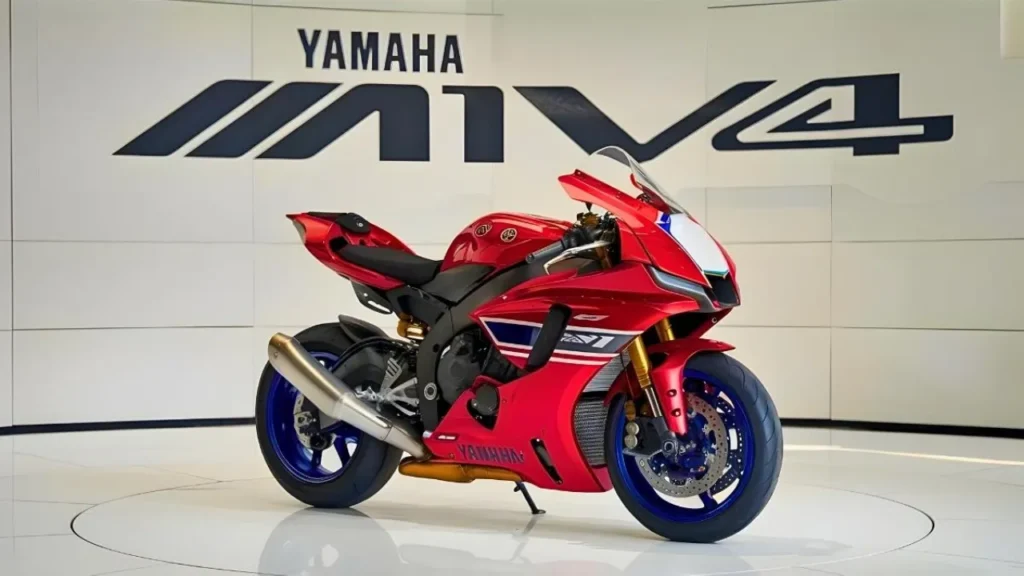
The 2026 Yamaha M1 V4 represents a turning point in modern MotoGP engineering, marking a historic shift in Yamaha’s long-standing design philosophy. For decades, Yamaha relied on its signature inline-four engine, known for smooth delivery and exceptional cornering precision. However, evolving competition and performance demands have led to the adoption of a V4 configuration, aligning Yamaha with current MotoGP trends.
This transformation is more than a mechanical upgrade. It reflects Yamaha’s commitment to staying competitive in a rapidly advancing racing environment. The move to a V4 engine signals a strategic reset focused on long-term performance, adaptability, and innovation without abandoning the brand’s core identity.
A Defining Shift in Yamaha’s Racing Philosophy
The transition from an inline-four to a V4 engine is one of the most significant changes in Yamaha’s racing history. Inline-four engines have traditionally delivered smooth and predictable power, which made Yamaha bikes highly rider-friendly. However, MotoGP competition has increasingly favored V4 engines due to their compact design and higher power potential.
The 2026 Yamaha M1 V4 is not about replacing past success but building upon it. Yamaha engineers have spent years researching and testing this new architecture to ensure it meets modern racing demands while preserving the balance and control riders expect from the M1 platform.
Engine Innovation: The Heart of the M1 V4
At the core of the new machine is a purpose-built V4 engine designed specifically for MotoGP competition. This engine focuses on delivering stronger acceleration, improved top-end performance, and better integration with advanced electronics systems.
Rather than focusing only on peak horsepower, Yamaha has prioritized a controlled and predictable powerband. Early insights suggest smoother throttle response and consistent performance across race distances, which plays a crucial role in tire management and rider confidence during long races.
Chassis Development While Preserving Yamaha DNA
Despite the major engine change, Yamaha has worked carefully to maintain the handling characteristics that made the M1 successful. The new chassis has been redesigned to accommodate the V4 engine while retaining strong front-end feedback.
Updates to frame geometry improve balance between agility and high-speed stability. Adjustments to the swingarm and suspension help manage the increased torque produced by the new engine, ensuring the bike remains stable during acceleration and corner exits.
Aerodynamics Redesigned for Modern Racing
The 2026 Yamaha M1 V4 introduces a fully updated aerodynamic package designed for modern MotoGP conditions. The new fairing and winglet design focus on increasing downforce while minimizing drag.
These improvements help reduce wheel lift during acceleration and enhance straight-line stability. Additionally, optimized airflow improves cooling efficiency, allowing the bike to maintain consistent performance even under demanding race conditions.
Advanced Electronics for Precision Control
Modern MotoGP bikes rely heavily on electronics, and Yamaha has refined its systems to complement the V4 engine. The M1 V4 includes updated traction control, engine braking systems, and power delivery mapping.

These technologies allow riders to adapt to varying track conditions, tire wear, and fuel loads throughout a race. The focus remains on enhancing rider control rather than limiting it, ensuring a natural and confident riding experience.
Impact on Riders and Performance Expectations
The shift to a V4 platform introduces a learning curve for Yamaha riders, but it also provides new opportunities. Riders who previously struggled with straight-line speed may benefit from improved acceleration and competitive performance on faster circuits.
While adaptation is required, the M1 V4 platform offers greater flexibility and development potential. With continued testing and refinement, it has the capability to evolve into a consistent contender at the front of the grid.
Fan Reactions and MotoGP Implications
The unveiling of the 2026 Yamaha M1 V4 has sparked strong reactions among MotoGP fans. Some view it as a necessary evolution to remain competitive, while others see it as the end of Yamaha’s distinctive inline-four identity.
Regardless of perspective, this move reflects how MotoGP continues to push manufacturers toward innovation. Yamaha’s willingness to adapt strengthens competition and raises the level of performance across the championship.
Expected Specifications of 2026 Yamaha M1 V4
Below is an overview of the expected technical highlights based on early reports and development insights. Final specifications may vary as testing continues.
| Specification | Details |
|---|---|
| Engine Type | V4, MotoGP Prototype Engine |
| Power Output | Estimated 250+ HP |
| Transmission | Seamless 6-Speed Gearbox |
| Chassis | Aluminum Twin-Spar Frame |
| Aerodynamics | Advanced Winglets & Revised Fairing |
| Electronics | Traction Control, Engine Brake, Ride Modes |
| Fuel Capacity | MotoGP Regulation Standard |
| Weight | Approx. 157 kg (Minimum Regulation) |
Disclaimer
This article is based on early reports, development insights, and available information at the time of writing. Final specifications, design elements, and performance figures may change as official testing and updates continue.
Readers are encouraged to follow official Yamaha and MotoGP announcements for the most accurate and up-to-date details before making any decisions based on this information.